
Residential vs. Commercial Fencing in Charleston, SC
Not sure whether your project calls for residential or commercial-grade fencing? Here's an honest breakdown of the differences — materials, costs, permits, and what actually matters for your specific project in Charleston County.

Commercial fencing — Charleston, SC · Budget Fencing & Construction
Residential vs. Commercial Fencing — What Actually Differs
The distinction isn't just about the property type. It's about what the fence needs to do, how long it needs to last under what conditions, and what regulatory requirements apply.
Residential Fencing
Designed for homes, backyards, front yards, and private properties. Priorities are curb appeal, privacy, HOA compatibility, and neighborhood character.
- Standard material gauges and post sizing
- Heights typically 3–6 feet
- Appearance and HOA approval drive design
- Permits generally not required under 6 feet
- Wood, vinyl, aluminum, hog wire most common
- Installed to residential code standards
- Lower per-linear-foot cost than commercial grade
- HOA Architectural Control approval often required
Commercial Fencing
Designed for businesses, industrial sites, commercial developments, and public-facing properties. Priorities are security, durability, perimeter control, and code compliance.
- Heavier material gauges and larger post sizing
- Heights often 6–8+ feet for perimeter security
- Function and security drive design
- Permits typically required regardless of height
- Chain link, commercial aluminum, heavy-duty wood most common
- Must meet commercial zoning code requirements
- Higher per-linear-foot cost due to material specifications
- May require engineering review for taller installations
Residential vs. Commercial Fencing — Full Breakdown
| Factor | Residential Fencing | Commercial Fencing |
|---|---|---|
| Primary Purpose | Privacy, curb appeal, pet/child containment | Security, perimeter control, screening |
| Typical Heights | 3–6 feet | 6–10+ feet |
| Post Sizing | Standard — typically 4×4 or 2-3" round | Heavy duty — typically 2.5"–4" round steel or 6×6 wood |
| Material Gauge | Standard residential gauge | Heavier commercial gauge — greater wind and impact resistance |
| Common Materials | Wood, vinyl, aluminum ornamental, hog wire | Chain link, commercial aluminum, heavy wood, welded wire |
| Permit Required? | Generally no under 6 feet | Typically yes regardless of height |
| Cost Per LF | $18–$50/LF depending on material | $25–$80+/LF depending on material and height |
| HOA Review | Required in HOA communities | N/A — commercial zoning typically governs |
| Installation Depth | Standard — typically 1/3 post length | Deeper — engineered for greater wind load |
| Gate Hardware | Residential latches, hinges, and closers | Heavy-duty commercial hardware, access control options |
| Lifespan | 15–30 years depending on material | 20–30+ years with heavier specification |
Not sure which applies to your project? Request a free quote — we'll assess your specific property and recommend the right specification.
Commercial Fence Projects We Handle in Charleston County
Restaurant & Retail Screening
Outdoor dining enclosures, trash and utility screening, patio privacy fencing, and service area separation for restaurants and retail properties throughout Charleston County.
Wood screening · Aluminum · Dumpster enclosures
Property Management & HOA Common Areas
Perimeter fencing for HOA common areas, amenity enclosures, pool fencing, and community entry features for property management clients across Charleston County.
HOA · Amenity areas · Pool enclosures
Commercial Perimeter Fencing
Heavy-duty perimeter fencing for commercial properties, business parks, storage facilities, and industrial sites requiring security and access control across the region.
Perimeter · Security · Access control
Parking Lot & Site Fencing
Chain link and ornamental aluminum fencing for parking lots, construction sites, and commercial land parcels throughout Charleston County. Fast installation for time-sensitive commercial projects.
Chain link · Parking · Construction sites
Commercial Privacy Screening
Heavy-duty wood privacy fencing and commercial screening panels for businesses that need to separate areas, screen equipment, or create defined zones within a commercial property.
Privacy screening · Equipment enclosures
Multi-Family & Residential Developments
Fencing for apartment communities, townhome developments, and multi-family properties — often a hybrid of commercial-grade installation with residential-appearance materials for curb appeal.
Multi-family · Townhomes · Developments
The Gray Zone — Projects That Are Neither Fully Residential Nor Commercial
Many projects in Charleston County fall between the two categories. A large residential property on Johns Island with acreage that needs agricultural-grade fencing. A short-term rental property that needs privacy screening that meets both residential aesthetics and commercial durability. A mixed-use development where the fence must satisfy both HOA design standards and commercial code requirements. Budget Fencing & Construction handles all of these — we assess the specific requirements of your project and recommend the right specification, not the cheapest or the most expensive.
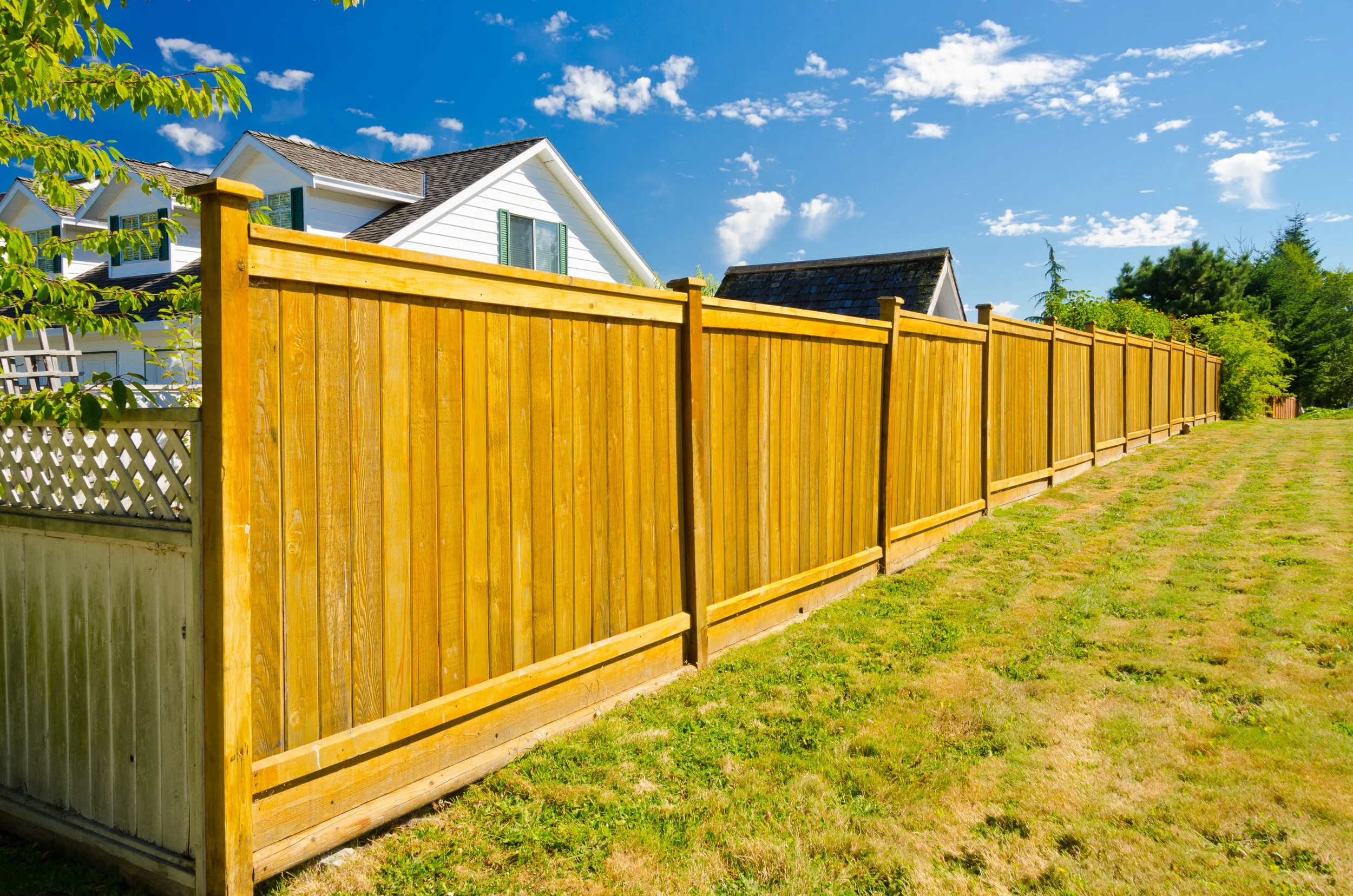
Residential fence installation — Kiawah Island, SC · Budget Fencing & Construction
Which Fence Specification Is Right for Your Charleston Project?
Answer these three questions to determine whether residential or commercial-grade fencing makes more sense for your specific situation.
What is the property zoning?
If the property is residentially zoned, residential-grade fencing typically meets code requirements. If it's commercially zoned, you likely need commercial-grade materials and a permit regardless of fence height. Mixed-use or agricultural zoning falls in between — we assess these case by case.
What is the primary function?
If the fence primarily serves privacy, aesthetics, or pet containment — residential specification is right. If it primarily serves security, perimeter control, or public-facing screening — commercial specification is more appropriate. Fences that must resist vehicle impact, forced entry, or sustained public contact need commercial grade.
What height is required?
Fences under 6 feet in residential zones typically don't require permits and residential spec is appropriate. Fences over 6 feet, or any height on a commercial property, typically require a permit and may require commercial-grade materials to meet the engineering requirements of taller installations in Charleston County's wind environment.
Residential vs. Commercial Fencing — Questions Answered
What is the difference between residential and commercial fencing?
Residential fencing prioritizes curb appeal, privacy, and HOA compatibility for homes and private properties. Commercial fencing prioritizes security, durability, and code compliance for businesses and public-facing properties. The primary differences are material gauge and weight, post sizing, installation depth, height, and the permit requirements that apply to each.
Does Budget Fencing install commercial fencing in Charleston?
Yes — Budget Fencing & Construction installs commercial fencing throughout Charleston County for businesses, property managers, HOA common areas, restaurants, and commercial developments. We handle commercial aluminum ornamental fencing, heavy-duty wood privacy screening, commercial chain link, and dumpster enclosures.
Is commercial fencing more expensive than residential?
Generally yes — commercial fencing typically costs more due to heavier material gauges, larger post sizing, deeper post installation, and permit requirements. Commercial projects also tend to involve longer perimeter runs. Budget Fencing provides free written quotes on commercial fencing projects so you have specific numbers before committing.
Do commercial fencing projects require permits in Charleston County?
Yes — commercial fencing projects in Charleston County typically require a building permit regardless of fence height. Commercial zoning codes impose stricter requirements than residential zones. We identify permit requirements during your project assessment and factor them into the timeline and quote.
Can Budget Fencing handle both residential and commercial work on the same property?
Yes — mixed-use and hybrid projects are common in Charleston County. A property that has both residential and commercial elements, or a development that needs different fence specifications in different areas, can be handled under a single contract. We assess the full scope and specify the right material grade for each section.
Residential & Commercial Fencing Across Charleston County
Budget Fencing & Construction serves residential and commercial clients throughout Charleston County — homes, businesses, HOA communities, and commercial developments.
Fencing for Every Project Type
Get a Free Fence Quote in Charleston, SC
Tell us about your project and we'll recommend the right specification, provide a written itemized quote, and handle permitting guidance. No pressure, no surprises.
Request a Free Quote