
Fence Permit & HOA Guide for Charleston County, SC
Everything you need to know before installing a fence in Charleston County — permits, HOA approval, setback rules, and what actually requires sign-off before you break ground.

HOA-approved fence installation — Charleston & Summerville, SC · Budget Fencing & Construction
Do You Need a Permit or HOA Approval?
Use this quick reference to understand what's required for your specific situation before contacting your municipality or HOA.
Fence Permit & Approval Quick Reference — Charleston County
Based on typical residential zoning. Always verify with your specific municipality and HOA before installation.
The Most Common Mistake Charleston Homeowners Make
Installing a fence without HOA approval is the most frequent issue we see — not the permit. Most residential fences under 6 feet don't require a county or city building permit. But if you live in an HOA community and install without architectural approval, you may be required to remove the fence entirely at your own cost. Always get HOA approval in writing before work begins — no exceptions.
Fence Permit Requirements by City & Town in Charleston County
Each municipality has its own rules that may differ from unincorporated Charleston County. Here's a general overview — always confirm directly with your local building department.
| Municipality | Permit Required? | Max Height (No Permit) | Front Yard Rules | Contact |
|---|---|---|---|---|
| Unincorporated Charleston County | Generally no for residential under 6’ | 6 feet | Setback varies by zoning district | Charleston County Building Inspections |
| City of Charleston | Check with city — varies by district | 6 feet (non-historic areas) | BAR approval required in historic districts | City of Charleston Zoning Department |
| Town of Mount Pleasant | Generally no for residential | 6 feet rear/side · 4 feet front | 4-foot max in front yard setback area | Mount Pleasant Planning & Development |
| Town of Summerville | Generally no for residential | 6 feet rear/side | Front yard restrictions apply — verify | Summerville Planning & Zoning |
| City of North Charleston | Check with city | 6 feet | Setback requirements apply | North Charleston Zoning |
| Town of James Island | Generally no for residential | 6 feet | Verify front yard setbacks | Town of James Island |
| City of Goose Creek | Check with city | 6 feet | Setback requirements apply | Goose Creek Planning & Zoning |
This table reflects general information as of 2026. Requirements change. Always verify current rules directly with your municipality's building or zoning department before installation.
How to Get HOA Fence Approval in Charleston County
Most HOA communities in Charleston County follow a similar architectural review process. Here's what to expect and how to prepare a successful application.
Request your HOA's Architectural Guidelines
Before doing anything else, get a copy of your HOA's Architectural Control Guidelines (ACG) or Design Standards document. This defines exactly what fence styles, materials, heights, and colors are approved in your community.
Get a written quote with material specs
Most HOA applications require a written contractor estimate with specific material details — fence style, height, material type, color, and post specifications. Budget Fencing provides application-ready documentation with every quote.
Prepare a simple site plan
Draw a basic diagram of your lot showing where the fence will run relative to your property lines. Include distances from the property line and any gates. HOAs typically require this as part of the application.
Submit to the Architectural Control Committee
Submit your application, site plan, material specs, and any color samples to your HOA's Architectural Control Committee (ACC). Most ACC committees in Charleston County meet monthly — plan for a 30–45 day response window.
Get written approval before scheduling installation
Do not schedule installation until you have written approval in hand. Verbal approval is not sufficient. Keep your approval letter for your records and provide a copy to your contractor before work begins.
- Wood board-on-board privacy fence (6’ max)
- Wood dog-ear privacy fence (6’ max)
- Vinyl privacy fence — white or tan
- Vinyl picket fence — white
- Aluminum ornamental fence — black or bronze
- Wood picket fence — painted white
- Split rail fence on rural lots
- Chain link fencing (prohibited in most HOAs)
- Barbed wire or electric fencing
- Unpainted or unstained wood in front yards
- Fences over 6 feet without variance
- Corrugated metal or industrial materials
- Bright or non-neutral colors
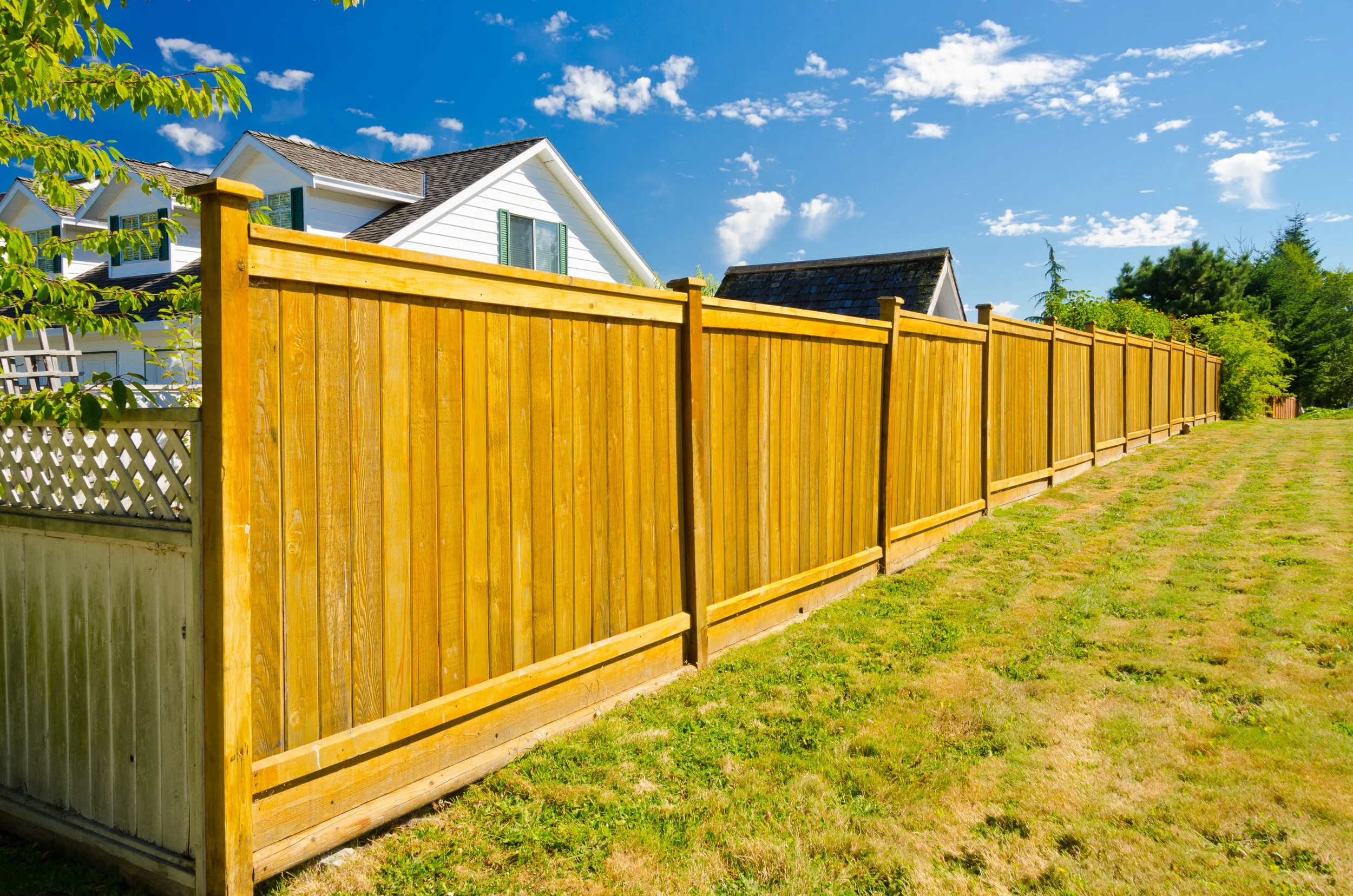
HOA-approved privacy fence installation — Kiawah Island, SC · Budget Fencing & Construction
How Close to the Property Line Can You Build a Fence?
Setback requirements determine how far your fence must be from your property line, the street right-of-way, and neighboring structures.
Rear & Side Yards
In most residential zones across Charleston County, fences can be built at or very near the property line in rear and side yards. Verify your exact property line with a survey if there's any uncertainty — property lines in older Charleston neighborhoods are sometimes unclear.
Front Yards
Front yard setbacks are stricter. Most Charleston County municipalities require fences to be set back from the street right-of-way — typically 5–15 feet depending on the zoning district. Front yard fence heights are often limited to 4 feet even where 6-foot fences are permitted in the rear. Check with your municipality.
Corner Lots
Corner lots have two street-facing sides, which means setback requirements apply on two sides of the property instead of one. Corner lot fence placement requires extra attention — both street setbacks must be respected, and sight triangle requirements at the intersection may further restrict fence placement near the corner.
When to Get a Property Survey Before Installing a Fence
If you are not 100% certain of your property line location, get a survey before you fence. Installing a fence even a few inches over the property line creates legal liability with your neighbor and may require the fence to be moved at your cost. In Charleston's older neighborhoods — downtown, West Ashley, many parts of North Charleston — property lines are frequently unclear, and surveys pay for themselves quickly by preventing disputes.
South Carolina Pool Barrier Code — What You Need to Know
Pool fencing in South Carolina is governed by the SC Residential Swimming Pool and Spa Safety Act. Here are the key requirements for Charleston County homeowners.
Minimum Requirements
- →Minimum fence height of 48 inches (4 feet)
- →No openings that allow a 4-inch sphere to pass through
- →Gates must be self-closing and self-latching
- →Gate latches must be on the pool side and at least 54 inches from the ground
- →Fence must completely enclose the pool area
Practical Notes for Charleston Homeowners
- →Most homeowners install 6-foot privacy fencing for both code compliance and true visual enclosure
- →Vinyl and aluminum are the most common pool fence materials in Charleston County
- →Pool fencing typically requires a building permit regardless of height
- →Budget Fencing handles pool barrier code compliance on every pool fence installation
- →HOA requirements for pool fencing may be stricter than state code minimums
Permit & HOA Questions — Answered
Do I need a permit to build a fence in Charleston County?
Most residential fences under 6 feet in unincorporated Charleston County do not require a building permit. However, the City of Charleston, Town of Mount Pleasant, and other municipalities have their own requirements. HOA approval and zoning setback requirements also apply regardless of permit status. Always verify with your specific municipality before installation.
How close to the property line can I build a fence?
In most residential zones, fences can be built at or near the property line in rear and side yards. Front yard fences typically have setback requirements of 5–15 feet from the street right-of-way. If you're uncertain about your property line location, a survey is worth the investment before fencing to avoid neighbor disputes.
What fence styles do most HOAs approve in Charleston County?
Most HOAs in Charleston County approve wood privacy fences, vinyl privacy and picket fences, and black or bronze aluminum ornamental fencing. Chain link is commonly prohibited. The specific approved styles, heights, and colors are defined in your HOA's Architectural Control Guidelines — always request a copy and submit for approval before scheduling installation.
How long does HOA fence approval take?
Most HOA Architectural Control Committees (ACC) in Charleston County meet monthly and respond within 30–45 days of a complete application. Some HOAs with active management companies can respond faster. Submit a complete application — material specs, site plan, and color samples — to avoid delays from incomplete submissions.
Can Budget Fencing help me with HOA approval?
Yes — we regularly assist Charleston County homeowners with HOA applications. We provide material specifications, color information, fence height details, and site diagrams that meet most HOA application requirements. We're familiar with the common requirements of many HOA communities across Charleston County.
HOA-Experienced Fence Installation Across the Lowcountry
Budget Fencing & Construction installs HOA-approved fencing throughout Charleston County. We know the requirements and approval processes for communities across the region.
Browse Our Fence Options
Get a Free Fence Quote — HOA Application Docs Included
We provide material specifications, diagrams, and documentation ready for HOA submission with every quote. No extra charge.
Request a Free Quote