
Charleston Style Fence Installation
Traditional Lowcountry fence designs — painted pickets, ornamental profiles, and historic district expertise. Built by a locally owned contractor who knows Charleston's architectural character from the ground up.
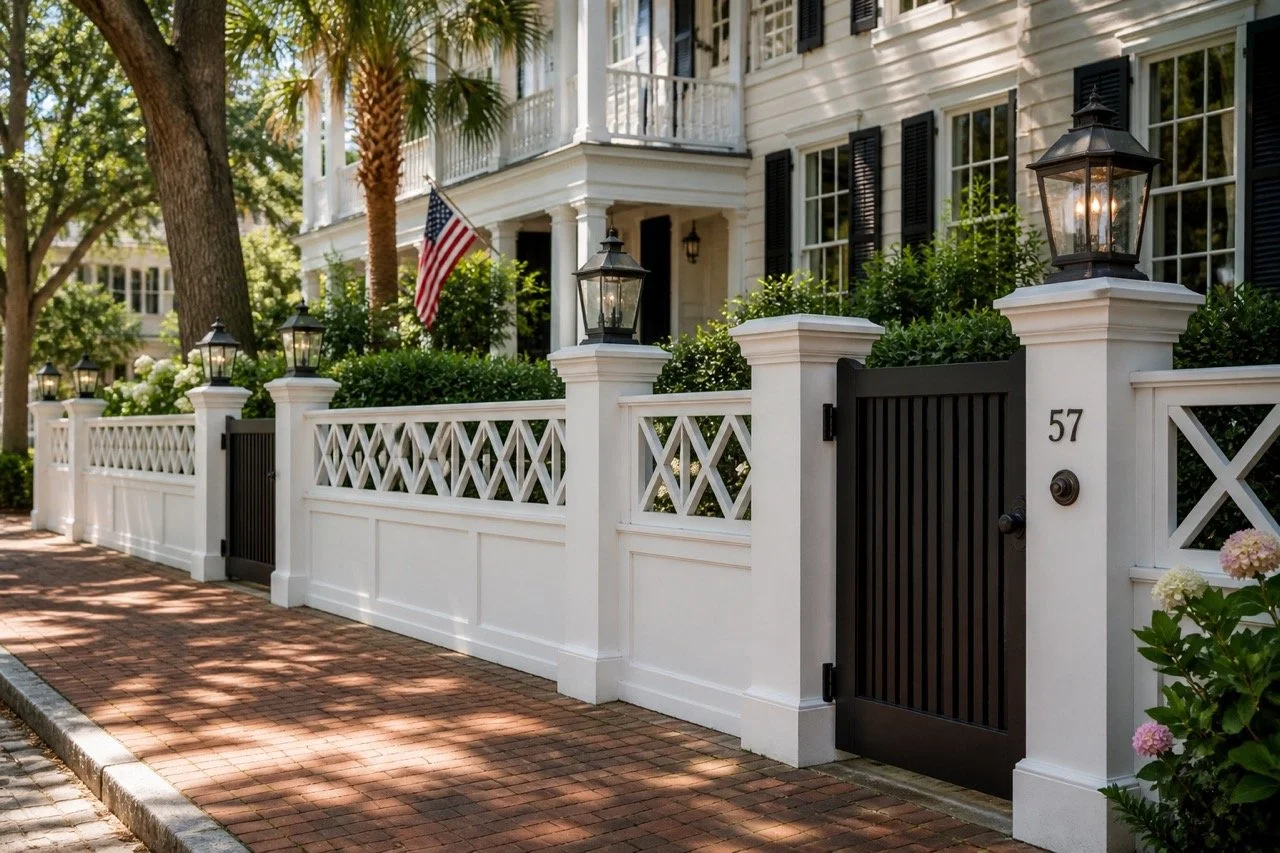
Traditional Charleston style fence — downtown Charleston, SC · Budget Fencing & Construction
What Makes a Fence "Charleston Style"?
Walk through the streets of the downtown peninsula, South of Broad, Harleston Village, or Ansonborough and the fencing pattern repeats with remarkable consistency: low to mid-height picket profiles in painted white or black, often with spear or ball-top finials, sometimes anchored by brick column posts, always in harmony with the home's architectural character.
The Charleston style fence is not a single product — it's a design philosophy rooted in the city's 18th and 19th century architectural heritage. It prioritizes proportion, craftsmanship, and visual continuity with the streetscape over privacy or enclosure. A Charleston fence announces that you've arrived somewhere with character.
Outside the historic district, that same aesthetic has spread across the entire Lowcountry. Homeowners in Mount Pleasant, Johns Island, James Island, and Summerville choose Charleston-style fencing because it complements the region's architectural sensibility — whether the home is a 200-year-old single house on Meeting Street or a new construction on Johns Island.
- Painted wood picket — white or black, spear or ball-top finials
- Aluminum ornamental — replicates traditional iron profiles
- Low to mid-height profile — typically 3 to 4 feet
- Brick or masonry column posts on formal properties
- Prioritizes curb appeal and streetscape harmony
- BAR-compatible designs for historic district properties
- Works throughout Charleston County — not just downtown
Traditional Lowcountry Fence Profiles We Install
Painted Wood Picket — Spear Top
The most historically accurate Charleston fence style. Square-cut or turned posts with spear-top pickets in painted white or black. Scaled to the home's proportions — typically 3 to 4 feet on residential properties.
Most historic · BAR compatible · White or black
Painted Wood Picket — Ball Top
Rounded ball finials on each picket — a softer, slightly more informal variation that appears throughout Charleston's residential neighborhoods. Often used on side and rear yard sections where a less formal profile is appropriate.
Traditional · Residential neighborhoods · Classic
Aluminum Ornamental — Iron Style
Powder-coated aluminum panels that replicate the look of traditional wrought iron. Provides the historic aesthetic without iron's maintenance burden — no rust, no repainting, fully salt-air resistant for coastal properties.
Iron aesthetic · Zero maintenance · Coastal ready
Column Post with Picket Infill
Masonry or wood column posts at regular intervals with painted picket infill panels between. A more formal, estate-style profile used on larger properties and formal garden settings throughout the Lowcountry.
Formal · Estate · Historic district
Double-Pointed Picket
Two-pointed Gothic-style picket tops with slightly more visual weight than the standard spear. Common in Charleston's Victorian-era neighborhoods and widely used in early 20th century residential construction throughout the peninsula.
Victorian · Gothic · Peninsula neighborhoods
Custom Lowcountry Design
Many historic Charleston properties have unique fence profiles specific to the home's era and architectural style. We work from photographs and site measurements to replicate or complement existing fence elements with custom fabrication.
Custom · Historic match · Site-specific
The Charleston Fence Beyond the Historic District
The Charleston-style fence aesthetic is not confined to the downtown peninsula or historic overlay zones. It has spread organically across the entire Lowcountry because it works — the painted picket profile and ornamental iron-style panels complement virtually every architectural tradition found in Charleston County, from antebellum farmhouses on Johns Island to traditional cottage-style homes in Mount Pleasant's older neighborhoods. Choosing a Charleston-style fence on any property in the region is a decision to participate in a design lineage that's nearly as old as the country itself.

Charleston style fence — Johns Island, SC · Budget Fencing & Construction
Board of Architectural Review (BAR) — What Charleston Homeowners Need to Know
Properties within the City of Charleston's historic overlay districts require BAR approval before fence installation. Here's what that means and how to navigate it.
Our Charleston Style Fence Installation Process
Free On-Site Quote
We assess the property, review the architectural context, discuss historic district requirements if applicable, and provide a written itemized quote.
Design Selection
We help select the right profile, height, material, and color for your property — including BAR documentation if you're in a historic overlay district.
Fabrication & Installation
Posts set at correct depth. Pickets or panels installed with consistent spacing and alignment. Custom profiles fabricated to specification where required.
Cleanup & Walkthrough
Full site cleanup and walkthrough before payment. Every detail reviewed — alignment, gate operation, paint condition, and post stability.
Charleston Style Fence Questions — Answered
What is a Charleston style fence?
A Charleston style fence refers to the traditional fencing aesthetic associated with Charleston's historic architecture — typically painted wood or aluminum ornamental pickets, often with spear or ball-top finials and a low to mid-height profile (3–4 feet) that complements the city's residential streetscape. The style prioritizes elegance and architectural harmony over privacy, and it appears throughout the entire Lowcountry — not just in downtown historic districts.
Do I need BAR approval for a fence in downtown Charleston?
Yes — properties within the City of Charleston's historic overlay districts require Board of Architectural Review (BAR) approval before any fence installation. The BAR evaluates whether the proposed fence is compatible with the historic character of the district. Budget Fencing & Construction can advise on BAR-compatible designs and provide documentation to support your application.
What fence materials are approved in Charleston's historic districts?
The BAR generally approves painted wood picket fences, wrought iron and aluminum ornamental fencing, and masonry column posts in traditional paint colors. Vinyl fencing is typically not approved in historic overlay districts because it is not a traditional material. Chain link and privacy panels are generally not approved along street-facing frontage in historic districts.
Can I install a Charleston style fence outside the historic district?
Absolutely — Charleston-style fencing is popular throughout the entire Lowcountry. Homeowners in Mount Pleasant, Johns Island, Summerville, and suburban Charleston regularly choose traditional Charleston-style picket fences and ornamental designs because they complement the region's architectural character. The style works beautifully on any property where a classic, refined aesthetic is the goal.
Is aluminum a good substitute for wrought iron in a Charleston style fence?
Yes — aluminum ornamental fencing is the most practical substitute for traditional wrought iron in Charleston's climate. It replicates the iron aesthetic exactly while eliminating iron's primary drawback: rust. In Charleston's humid, salt-air environment, iron fencing requires annual painting and rust treatment to maintain its appearance. Aluminum requires nothing more than an occasional rinse — making it the dominant choice for ornamental fencing on coastal and waterfront properties.
Charleston Style Fencing Across the Lowcountry
Budget Fencing & Construction installs traditional Charleston-style fencing throughout Charleston County — from the historic downtown peninsula to Johns Island, Mount Pleasant, and beyond.
Other Fencing Services from Budget Fencing
Get a Free Charleston Style Fence Quote
Historic district or suburban Lowcountry — we'll design the right fence for your property and handle the paperwork. Free quotes, no pressure.
Request a Free Quote